
Understanding Dog Bite Behavior or Don’t Blame the Dog When it Bites
The Story of “Courage”
April 10, 2010
Pickin’up da Poop
July 25, 2010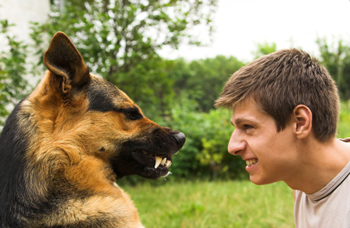
Of all the dog bites that occur in the U.S., children are most often the victims. Did you know that when a dog bites, it’s usually due to human error and not because the dog is vicious? How you interact with dogs has a direct bearing on your safety.
As a Grandmother of seven and the owner of two dogs, I care very much about helping to keep you and your children safe around dogs. I would also like to lessen the number of dogs who suffer the ultimate consequence by unnecessarily and unfairly paying with their lives just because they’ve bitten. My focus will be on the most common reasons a dog bites (which may be quite different from you might think) and tell you how you can help yourself and your children to be safer around dogs.
Puppies are not born vicious any more than human babies are. A dog that can be fairly labeled as being aggressive is one that behaves aggressively with all humans and other animals the majority of, if not all the time and would handle every situation in an aggressive manner. There is also an extremely rare disorder known as “Rage Syndrome” which so far studies show is linked to genetics and other medical factors. The chances of encountering a dog with either of these issues in your lifetime are slim as are the chances of experiencing a dog bite in which the dog should be declared vicious and put down as a consequence. The “once a biter always a biter” is simply not true and dogs do not “thirst for blood” after they have tasted it. Even the friendliest of family pets may bite under the right circumstances but that doesn’t mean it’s become vicious or any more unsafe to be around than it was before it bit. In other words, just because a dog bites does not mean they’ve morphed into Cujo.
Generations of humans believe that that when a dog bites, it’s dangerous and should be euthanized. In most cases this could not be farther from the truth. If a normally easy going person with a “never hurt a fly” personality were to step outside their usual character and punch someone, this person is not then automatically considered violent just as one bite does not mean the dog should be labeled vicious.
There is a huge difference between a dog bite and a dog attack. The two phrases are not interchangeable and although some of the dynamics are similar they are also different and much more involved than I will go into. I do believe that if more people practiced solid dog safety, we could cut down on the number of dog attacks as well but that’s just the tip of the iceberg.
It’s NOT the Breed or the Size its the BEHAVIOR
If a Rottweiler bares his teeth and growls he’s considered aggressive. If a four pound Yorkshire Terrier bares his teeth and growls he’s considered cute. Why the double standard? Growling and showing teeth is a dog behavior on which breed and size has no bearing. The Yorkie going crazy at your living room window when someone passes by is no different than the Rottweiler going crazy at your window. Granted, the Rottie can do more damage and is much scarier but the behavior is the same. People quite readily excuse little dogs from aggressive behavior while the big dog displaying the same behavior is considered vicious.
Neither the size nor the breed of the dog matters when it comes to practicing dog safety. A dog bite is a dog behavior most often resulting from fear and/or an attempt to protect itself or its family. Any breed of any size is not only capable of biting but will bite under the right circumstances. The circumstances may not make one bit of sense to us humans, but they make perfect sense to the dog and this is quite often what humans fail to realize when a dog bites.
FEAR is the #1 REASON a Dog Bites
A common name for this is “fear biting” or “fear aggression.” A fearful dog is a dangerous dog. Do not believe for one minute that every dog gives a signal such as a warning growl before striking. The truth is that most dogs strike silently, without warning and they’re fast as greased lightning. You have hands, feet and the ability to think and reason to help you fight off danger; a dog has but one thing … his teeth. If you’re afraid or in danger you’re going to use every weapon at your disposal and so will a dog. You are not euthanized for protecting yourself, but millions of dogs are every day.
There IS A REASON for Every Bite
After a dog bites its natural for both owner and victim to say things like “I don’t understand, there was no reason for the dog to bite.” They’re confused, scared, angry, hurt and totally thinking of the incident like a human which is exactly why they don’t get it!
Dogs do not bite just to bite. In the dog’s mind there was a valid reason to bite. In order for humans to understand what and why it happened for what it really is, they need to first understand dog behaviors and how a dog perceives and relates to people and situations. Notice I did not say “how a dog thinks” because dog’s don’t “think” like you and I do. There is ALWAYS a valid reason the dog has bitten but you cannot determine or understand it by thinking as a human.
The HUMAN FACTOR
Here’s the part that most people won’t like, don’t understand and definitely do not want to hear. Humans are responsible for most dog bites whether it be the dog’s owner, the victim or both. Like it or not, if you or your child suffers a dog bite it’s the victim and/or the dog’s owner who opened the door for it to happen. It’s the same principal as “driver error” when there’s been an accident. Nobody meant for it to happen but the fact is that someone goofed. Someone wasn’t paying enough attention; they made a bad judgment call or any number of other factors play a part with the bottom line being human error. In order to keep people safer and save more dogs lives, people need to learn to:
- Understand, accept and respect dogs for what they truly are before they are anything else. No matter how much we humanize them, dogs are animals first and foremost, always and forever.
- Dog owners need to understand that dog behavior is not the same as dog training. Learn the differences between them and how to quickly recognize what is a behavior and what is a training issue and then follow through accordingly.
- Dog owners need to understand that dog behavior is not the same as dog training. Learn the differences between them and how to quickly recognize what is a behavior and what is a training issue and then follow through accordingly.
- Whether you own a dog or not, they’re a part of our lives and you will have contact with them. Make basic dog safety a part of your everyday life and teach it to your children.
Language & COMMUNICATION
Dogs are social animals that in most cases enjoy and thrive on human companionship but they communicate in the language of animals which is very different from the human language. Dog to dog interaction takes place first through smell then through eye contact (which includes very subtle signals to one another) and finally through hearing. Most humans don’t understand dog language or behaviors so they don’t see these signals nor can they translate them into human sense. Dogs can learn to respond to simple human commands but they don’t grasp the human language as we do. They actually respond more to the tone and sound of our voice than to the words we use.
Think of yourself visiting France without knowing the French language. Perceptions and visuals become a huge part of communicating with the French population. Miscommunication, misunderstood visuals and misconstrued perceptions due to the language barrier are very similar as to why human actions or reactions can lead to a bite or help keep it from happening.
FEARFUL Humans
If you’re afraid of dogs the best thing to do is to stay away from them. Even though your fear may not be apparent to the humans around you, dogs sense it which makes it unsafe for you to be near dogs. Fear is instability to some dogs and may make them uncomfortable or fearful. Remember that a fearful dog is dangerous to be around. If you’re afraid of something are you not going to try to protect yourself from it? Remember that no matter how domesticated dogs are, they are animals first before they are anything else and they may revert to survival mode in order to protect themselves which is no different from a human when faced with danger.
I encourage you to work towards ridding yourself of your fear because not only are dogs wonderful creatures but you’re safer around dogs if you are not afraid of them. Please don’t attempt to do this on your own nor with strange dogs. Get some help from a professional dog behaviorist (not to be confused with a dog trainer) and make sure the dog(s) you work with have a very calm personality. You don’t want to try to get over your fear of dogs with one that’s high strung, excitable or anxious. A certified service dog is a good choice. As an example of behavior before breed, some of the best service dogs are Pit Bulls! One of the Michael Vick dogs (a Pit Bull named Georgia) has become a fantastic service dog, which is just another example of how people misunderstand and misjudge dogs when they judge strictly by breed reputation. It’s not the breed that’s important it’s the behavior.
Parents who teach their children to fear dogs are actually putting their child in more danger. A fearful child is a target. Their fear will stress them and they are likely to make bad choices which only escalate the danger level. Children are actually safer if they’re not afraid of dogs and learn instead to respect and interact safely with them. What you teach them now they’ll carry with them into adulthood. Remember that living in fear of anything is no fun, so consider what you’re saddling your child with if you teach them to be afraid of dogs.
AVOID DIRECT EYE CONTACT with Dogs
Some dogs interpret direct eye contact as a threat or confrontation and will react to protect themselves. One dog staring at another dog is a potential dog fight waiting to happen. Aren’t you uncomfortable when someone stares at you? So is a dog.
Young children have a normal tendency to stare and their height puts them at dog level. These two things put children at a dangerous disadvantage when encountering a dog that’s reactive to direct eye contact. If the child’s gaze happens to fall on a reactive dog’s face and particularly the dog’s eyes, this can be very dangerous. Most dog bites to children result in facial injuries.
If you see a child staring at a dog, do not speak to nor directly look at the dog. If the dog is leashed and can be safely removed from the area by its owner that’s perfect. But if that’s not possible then quietly and calmly divert the child’s visual attention off the dog. This will help to ease any threat the dog may perceive making the dog less likely to be a threat to the child. If you must speak to do this, keep your voice calm and in a low tone. An excited, nervous high pitched voice will excite the dog and the danger level. If there’s something handy that you could toss for the dog to play with like a ball for instance (but away from the child), this may help to redirect the dog’s attention and buy the opportunity to walk the child away from the situation. Walk calmly, do not run and do not pick the child up if at all possible. Picking up the child may make another target of the child because it may cause the dog to jump up on you and the child and the dog may try to grab at the child.
MEETING & GREETING a Dog
For your safety and protection and that of dogs everywhere, always ask the owner from a safe distance if it’s alright to meet their dog before approaching. If the owner grants permission then practice safety guidelines and any additional rules the dog’s owner requires when interacting with their dog.
Dogs meet first by smelling. It’s a common practice for people to stick their hand out for the dog to sniff and some are even looking directly in the dog’s face. This is like saying “Come on Fido, bite me!” How might you react if someone stuck their hand in your face and stared at you when you met them?
A safer way to meet a dog is to ignore the dog. Stand off-center or sideways with your arms and hands relaxed at your sides. This position tells the dog that you’re not a threat. The dog’s owner should sit or down their dog particularly if the dog is in an excited state. After you’re positioned in a non-threatening way and when (and only when) the dog is calm, the owner can then allow the dog to sniff you. Continue to ignore the dog as he approaches and sniffs; carry on a friendly conversation with the owner. Keep your voice calm and in a low tone. An excited voice excites a dog and an excited dog poses more of a bite threat than a calm one. When the dog and his nose have determined you are not a threat to them or their family they usually lose interest in active sniffing and then it’s safer to pet.
PETTING a Dog
If you are one to pet a dog on its head, stop this. Some dogs interpret a hand moving toward or down on their head as that they are going to be hit. The dog may become fearful and defensive because they perceive the human as a threat to their safety and so the potential for a bite increases.
Without leaning over the dog, pet under the chin or on the chest area and do not “thump” the dog. By thumping I mean slapping the dog on its side which seems to be popular with men. If you’re meeting a dog that came from an abusive situation thumping just might trigger some painful memories for the dog and he may react to protect himself. You may cause the dog pain or fear. I’ve seen some pretty heavy thumpers and I think how I would feel if someone would slap me on the back like that. I don’t like it, it stings!
HUGGING a Dog
Small children and teen-age girls love hugging and cuddling stuffed animals. What’s better than a stuffed animal? A live one of course! How many times have you seen an excited child run to a dog and hug it? I shudder every time I see this happen. Picture yourself being rushed by an excited stranger and hugging you. Are you uncomfortable? Don’t you feel a need to protect yourself?
Dogs don’t hug one another. Hugging is a comfort for the human not the dog. Like you, dogs have that “personal space” need and hugging invades these invisible boundaries. Although most dogs allow it without incident and many even appear to ask for it, dogs aren’t comfortable being hugged. Most humans don’t see the emotional discomfort hugging may cause a dog, even their own, because a dog calming itself is not obvious to the human eye.
MOVING FAST in the Presence of Dogs
This section is particularly important for children and sports minded people like joggers and bicyclists because this has to do with fast movement in the immediate vicinity of a dog.
Running towards a dog may cause him to interpret the runner as a threat and he may bite to protect. Running away from a dog may trigger any number of interpretations to the dog but a big one is prey drive. Prey drive is an instinct which is stronger in some dogs than others. Instincts cannot be trained out of a dog and this is one exception to behavior over breed where breed holds some importance.
Some breeds are bred for prey driven activities. Yorkies were originally bred for catching rats in clothing mills in the 1800’s. Australian Shepherds (Aussies) have herding in their genetic makeup. To help humans understand this, dogs relate to catching rats and herding sheep as their jobs. To some dogs, fast moving objects are something that needs to be caught, taken down or corralled. In the dog’s mind he’s only doing the job he was bred to do. Think about it, neither of these jobs can be done gently. A dog’s mouth and teeth essentially become their hands and a human may get bitten and the dog declared vicious and maybe even put down for doing his job.
STEPPING OVER a Dog
Most of us are guilty of this one. Never step over any dog including your own. Not only are you invading their personal space but you could be mid-stride and the dog could suddenly get up, knocking you over. You could misstep, lose your balance and land on your dog which might not only injure your dog but you as well. This will most definitely startle the dog at the very least and startling, scaring or hurting a dog may result in a bite. If someone sneaks up behind you and goes “Boo!” don’t you just want to slap them?
MEDICAL REASONS a Dog May Bite
There are a number of medical conditions that might cause a dog to act in ways that concern you and/or lead to a bite. Dogs can’t tell us when they’re not feeling well and they are experts at hiding pain and suffering just as a matter of survival. There are breeds, sizes and even shapes of dogs that are prone to various different ailments such as Hypothyroidism which may cause a dog to display inappropriate aggressive behavior. A simple blood test can diagnose Hypothyroidism and the medication for it is very inexpensive.
Please make sure to have your dog checked by a vet if it displays unexpected or inappropriate aggressive behavior. You may save someone from being bitten and you may save your dog’s life.
I hope I’ve been able to give you some tips on how to help keep yourself and your children more safe in the presence of dogs. I also hope that I’ve been able to show you that there are many reasons a dog may bite and that the instance of a dog being truly dangerous because it’s bitten is almost non-existent. Most bites can be prevented just by people educating themselves and their children. Dog owners need to educate themselves in the language and behaviors of dogs and get a little training or behavior modification help if you have concerns your dog may bite.
238 Comments
Hi, we have a sweet coon-hound mix. She has been a very sweet dog, but extremely possessive with her food when the other dog is around. They have fought a few times. Well, a few days ago she was sleeping and my daughter was sitting next to her. My daughter leaned and laid on top of her head slightly, the dog jump up and bit her in the face. She has never done that before! The kids have played with her since she was a puppy and my daughter has always hugged her and touched her while the dog slept. This was unusual. Should I worry?
Hi Leana,
The first thing I’d do is teach my child not to bother a sleeping dog. I don’t care how many times she may have done the same thing, that doesn’t make it right nor safe.
I’m sure you’ve heard that people can be startled out of a sleep and do some pretty strange things. I’ve almost been punched in the face more than once by my own husband when waking him. A dog is no different except they can’t punch, so they use their teeth. It sounds to me like your dog responding involuntarily to having been startled out of what may have been a deep sleep. You likely don’t appreciate this kind of thing and neither does your dog.
Additionally, dog’s have their own personal space just like people do and violating your dog’s space can bring a bite.
My suggestion is that you start teaching your child to respect your dog. I don’t see this as being your dog’s fault, I see it as a child not having been taught proper behavior, respect and boundaries around dogs. If you do this, no I don’t think you have reason to worry. Too many people allow their children to behave inappropriately around a dog and then the dog gets blamed and sometimes worse, if they bite.
I would have my dog thoroughly vet checked. You didn’t say how old your dog is now, eyesight and hearing could be changing, I’d definitely include that in a check up. I’d have her tested for hypothyroidism as well. If she’s healthy, not in any pain, eyes & ears good then I believe she just reacted to having been awoken from her sleep and all-around proper training for your child should cure the problem. Hugging and touching a sleeping dog is just not a good idea. Dogs deserve to have their sleep time respected no different than humans.
My dog has always been sweet and gentle with people. He bit the neighbor after the neighbor shoved his hand at my dogs face. This dog has never before bitten a person. Was very weird. I think he bit because of a way the guy had shoved his hand at him. Should I keep a closer eye on the dog?
Sounds to me like your dog is fine, it’s your neighbor you need to keep a better eye on. And to me this is not weird behavior for a dog. Your neighbor should not approach ANY dog this way, I don’t care how many times they’ve met & intermingled with one another. It sounds to me like your neighbor invaded your dog’s space, your dog didn’t appreciate the invasion and so your dog told him he didn’t like this.
I strongly suggest you read my article on How to Meet a Dog and then follow it for EVERYONE who comes in contact with your dog. It’s your job to protect your dog from space invaders. He can’t say “Get the heck away from me!” so you have to keep him safe from people putting him in this kind of situation in the first place. If someone came up to you and shoved their hand in your face how do you think you’d like it? Might you not push them away? Well, your dog can’t push either.
Just plain old good dog etiquette. Learn it and use it every day.
I have an almost two year old German Shepard. He’s very protective of our family. He’s been to formal training and continues to go to our trainer’s home on a regular basis for continued training. He definitely listens to the trainer better than he does to my husband and to myself but he’s better. I have two small children and I’ve never had any reason for concern when they’re playing with him. The other night I was play wrestling with my husband and my dog attacked me. I have four puncture wounds in my leg and he got my ear pretty good too. I had to go to ER for my wounds. Now I’m worried to have him around the kids and I’m nervous being around him too. I could tell he felt very bad because as soon as I got home from ER he walked up to me with his head down and ears pinned back. Do I have a reason to worry or was he just being protective?
Hi Jayme,
What kind of formal training did you send your dog to? I sure hope it wasn’t protection training. Why didn’t you train your dog yourself or at the very least train him yourself under the supervision of a trainer or attend formal dog training classes? Having someone else train your dog is why he listens to the trainer better than he does you and your hubby. The bond between trainer and dog should always be between the owner and dog not an outside trainer and dog. I much prefer training classes so that there are multiple dogs not just one-on-one’s with a single trainer & dog. Multiple dogs helps socialize dogs with one another and that’s hugely important for a dog.
You might be able to switch the bond over to you and hubby at least to some degree if you both take him to training yourselves starting with basic obedience classes. If you want that bond you’re going to have to work for it yourselves not pay someone to do it for you. My opinion is you need to start at the beginning which is why you need to start with basic obedience just as if you just got the dog and ignoring the fact he’s already been through this. Not only does he need to transition his bond over to you, but you and hubby need to learn to handle this on your own. The problem I see with this is that if you don’t follow the same training methods there’s going to be some confusion for the dog. He likely will never forget the original training but you may be able to be successful with new methods especially if they’re positive training methods such as clicker training. With the help of an obedience class and the trainer there you may be successful. Explain to the class trainer what happened previously and they may be willing to guide you.
For example; police K9’s are trained by professional trainers who do this for a living in the beginning. When the dog is ready to take their place in law enforcement their handlers come into the picture and train with the dog at the training facility for many weeks under the supervision of the professional trainers who started the job. Handler and dog continue to train daily on their own after they go home with the trainer. They also attend any number of formal training sessions throughout the year at either the original training facility or other facilities dedicated to this. This helps the handler and the dog get and keep that bond.
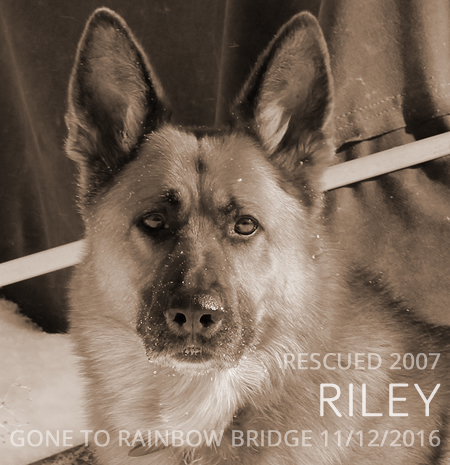
Your story brings back the memories of one of the worst mistakes we ever made with Riley. We sent him to training. Wrong wrong wrong thing to do, however in our defense this trainer told us that I would be involved in the training as in training Riley under the supervision of the trainer. This backfired after we took Riley there and for some reason unknown to us the trainer switched his tune and “never had time” for me to attend training so he trained Riley himself. I finally had enough of this “I don’t have time” bull and brought Riley home. Never ever EVER again will I send a dog to a trainer. I would stop taking my dog to the trainer immediately. My dog, my job and if I’m not willing to do this, I won’t have a dog.
If you had your dog formerly protection trained you likely increased the problem tenfold in my opinion. Most dogs will protect instinctively but German Shepherds are born protectors as you should know and they will protect their families with their lives if necessary. It sounds to me like your dog’s instincts told him your hubby needed protecting and so he protected and should not be blamed for his actions. I personally would not ever want to try to train the protection instinct out of a dog and likely never ever could anyway because it’s instinct it’s not the same as training obedience or tricks like sit, stay, down, beg etc.
We firmly believe that a dog formally trained in protection by a professional is more a danger and a liability when turned over to a family, especially a family that’s not trained with the dog. Think about this, what happens if you’ve had your dog professionally trained to bite on command (this is where we were going with Riley’s training) and you’re out walking your dog. Some stranger comes along and manages to grab you in a way you can’t give the command to bite. If the dog’s not given the command it may not bite to help you because he’s been so well trained not to bite unless you tell him. Because you can’t tell him he won’t do what you thought he was going to do automatically.
Although totally understandable, you being nervous around your dog is adding to the problem. Your dog did not attack you for no reason. Wrestling is a trigger for him and now that you know this you can act accordingly. You being nervous around him is going to make matters worse because your dog senses this. I really don’t think your dog is going to go around the house attacking you or anyone else for no reason. BUT remember, dogs perceive things differently than people so you need to start thinking like a dog as well. You do this by first asking yourself “How does my dog see this insert some action/situation here?” vs. how a human sees the same situation. You’d be surprised how different these perceptions can be! Think of it this way, your child is about to wander into the road. They do not see the danger but you do. You can apply this to what happened. You and your hubby didn’t see danger in your wrestling fun but your dog saw someone in need of protection.
I believe your dog was protecting and I believe this can happen again but only if IF YOU LET IT. Does this mean your dog needs a new home? Not if you’re willing to work with the dog, the family and take serious precautions. Wrestling around kicks in your dog’s protective instincts, you now know this and can take precautions but more importantly you can take proactive measures to show your dog that wrestling around between family members is not a danger he needs to act on. This is not a quick fix and needs strong dedication and likely lots of time to get your dog comfortable with what’s common fun physical family interactions. It also needs strong dedicated parental supervision and kids who understand the consequences if they don’t help with this. This kind of thing requires both parents and children to think before they act as normal families interact with one another. Spontaneous physical family fun cannot be a part of your family activities.
This is my suggestion if you want to get proactive which is what we do at our house. Two members of your family go into a bedroom, close the door and participate in a couple of minutes only of family wrestling or tickle sessions for example, complete with screeching and giggling. The dog needs to be leashed and supervised by an adult outside the door to hear this but not see it. This keeps family members safe while the dog listens to what’s going on. Your dog may get visibly upset or anxious, may try to get into the room and the supervising adult needs to work on calming the dog outside the door which means the adult needs to understand what dog calm is. Just getting the dog to sit or lie down is not necessarily calm, this person needs to read the dog’s silent signals which is not easy. Here is where some yummy high value treats come in handy. Each time the dog shows even the slightest calming sign such as sitting treat and praise like crazy. This doesn’t typically mean hard dry treats because those aren’t high value to most dogs, use something like tiny thumbnail size bits of boiled chicken or hot dogs. You don’t want your dog getting fat on treats.
I would then gently knock on the bedroom door (better yet use some walkie talkies) alerting the wrestling participants to cease wrestling and be quiet but remain in the bedroom. Walk the leashed dog away from the door to a safe distance and get him to sit or lie down. When the dog is calm signal the wrestlers to exit the bedroom calmly, all giggling and play time ceases before they exit the room. They must be calm as well when they exit. All human involvement as far as alerts to one another needs to be calm, soothing in a normal tone of voice. Raised voices and excited voices will excite the dog. Provided your dog is calm you can then release him to go greet the wrestlers and everyone should praise the living daylights out of the dog.
Again, keep this lesson to just a couple of minutes at first but do it often during the week. At least once per day for several weeks I would say and alternate the wrestlers and the responsible adults outside the door so the dog learns that everyone participates in all aspects. The more you do this the more likely the dog will learn that what he’s hearing is not harmful to anyone, he doesn’t need to protect and he may learn to just calmly go lay outside the closed door while the activity goes on inside the bedroom. As your dog learns to be more calm just hearing the activity you can lengthen the sessions by a minute or so each week while your dog learns “Hey, this is ok stuff!” going on in there.
After several possibly many weeks even months, when you feel your dog is handling this consistently in a calm fashion open the bedroom door but use a gate so your dog can then also see what’s going on while the gate and leash keeps the wrestlers safe and repeat the entire process until you achieve calm success with this now visual trigger. I would then move the visual activity to other rooms in the house and alternate the participants as long as you can gate the activity off safely. This lets the dog know that this kind of noise and human fun is ok in any room of the house and is ok activity between all family members.
I think I’d also get the dog involved in the wrestling meaning a one-on-one only between one family member and the dog. I would start with one adult getting down on the all four knees (at doggy level) and getting involved in fun session of things like rolling the ball/toy, bring it back, lay down on his side and rub him first gently and then increase the rubbing somewhat so he gets just a tiny bit excited. You don’t want him thinking this is an all-out brawl and getting overly excited because that can result in teeth marks in fun to him but not fun for you. Getting him used to wrestling activity with him is another possible way of getting him to accept that it’s ok.
When you feel your dog is ready to be allowed off-leash for the fun first try it several times by leaving him leashed and wearing a muzzle but remove the gates so you have control if he decides he’s really not ready to handle this safely. You may have to go back to Step 1 if you find he’s really not ready. Some dogs are quicker studies than other dogs.
A Note on Muzzles: Muzzles are in general not fun for a dog so you need to train him positively to wearing one before you just plant one on his face. You want to do this in a positive manner so here is one place to learn a good way to Train Your Dog to a Muzzle.
If you find this is not working then you have some safety precautions you can take.
We believe that unless there’s something going on medically or neurologically with a dog, dogs that over-react or react improperly to physical family fun have simply not been exposed or socialized to the fun. I don’t know how long your dog has been with you, if he was exposed to this kind of fun since puppyhood and is now suddenly over-reacting or if it’s new to him and/or if he’s new to your family. Things that dogs don’t understand can make them behave inappropriately which is not their fault. If they perceive for one blink of an eye that one of their family members needs their help, they’re going to help. Unfortunately, their idea of help and a human’s idea of help may be two very different things. Just like a child needs to be taught to do things like safely cross the street, not hit their brother over the head with a baseball bat, go to the bathroom in the toilet etc. a dog needs to be taught or shown appropriate behaviors when faced with something new.
I really hope you will decide to take some strong safety and proactive measures to help your dog understand and learn to act appropriately to the fun and games at your house.
The methods I’ve outlined are ones we would try in our house and they are only suggestions for you. The decision to put them into use is totally up to you. I cannot give you a guarantee they’ll work, I feel they would as long as you are dedicated and consistent with how you do things. Everyone in your household has to be on the same page so you don’t confuse your dog.
Please excuse your trainer from training duties and take responsibility for your own dog by following through with your own training and preferably in group training followed with consistent at-home training. Get that bond going between your family and your dog leaving outsiders out of the picture. All family members should participate in your dog’s training and it’s imperative to be consistent. You have no idea what goes on when your dog goes to your trainer’s house but you do know what goes on in your own house.